
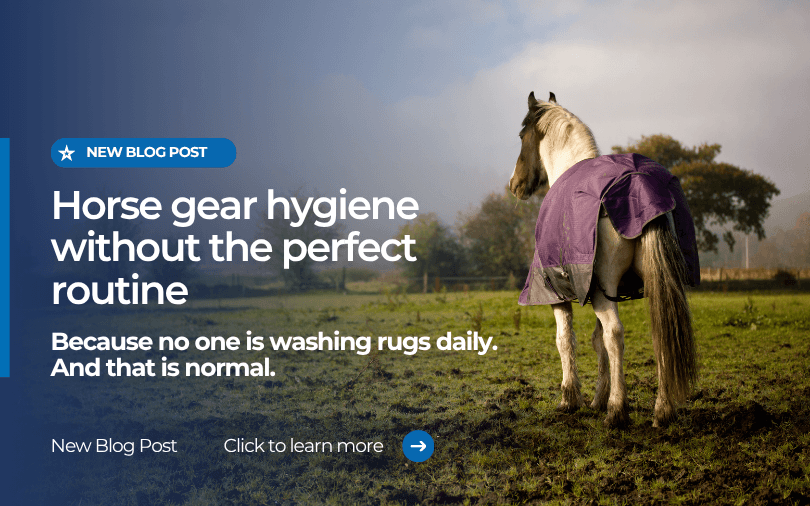
Horse people are experts at getting things done quickly. But horse gear hygiene is one of those areas where the ideal routine and the real routine rarely match.
In a perfect world, everything would be washed on schedule, dried completely, stored neatly, and rotated like clockwork. In the real world, rugs get pulled off damp, boots get thrown in the tack room, saddle pads get used again because there is no time, and gloves end up in the car for a week.
That is normal. It is also why horse gear can start to feel less fresh faster than expected, even when you are doing your best.
This guide is not about perfection. It is about what actually helps.
What builds up first
Most horse gear does not feel “off” because of one big event. It is the slow combination of damp, heat, dust and repeated contact.
Rugs and liners often hold onto moisture in inner layers. A rug can feel dry on the outside but still carry damp in the lining, especially after early mornings, light rain, or sweat. Stable dust clings to fibres and straps. Over time, that mix can change how a rug feels and smells, even if it looks fine.
Boots and saddle pads are high heat, high contact items. They sit close, experience friction, and absorb sweat. That is why they can develop odour quickly after repeat use. Gloves and helmet liners are similar. They are worn close, handled constantly, and washed less often than people admit.
The habits that help between washes
There are a few small habits that make the biggest difference.
Air time matters. If a rug comes off damp, let it fully dry before it goes back into storage. Hanging it properly beats folding it over a rail where moisture stays trapped.
Rotate when you can. If you have multiple pads or boots, rotating gives each item time to air out. Even one extra day can help.
Do the quick dust reset. A brush off and shake out sounds basic, but stable dust adds up. A quick reset keeps fibres from holding onto grime longer than necessary.
Store for airflow. Horse gear piled in a closed space holds moisture and odour. Even small changes, like spacing items out, can help.
What to look for when you shop horse gear
Some horse gear is easy to wash often. Some is not. Rugs, liners, pads and boots are not always realistically washed daily, even when they are technically washable.
That is why many brands build performance into the textile itself. Built in technology supports the product experience between washes, especially for items used repeatedly in demanding conditions.
HealthGuard® technology is incorporated during manufacturing and supports hygiene performance within treated articles. Depending on the product, this can include anti-microbial support for damp and build-up prone areas, anti-odour support for high heat contact zones, and anti-mosquito options for summer rugs and fly gear during mosquito season nuisance.
The goal is simple. Horse gear that holds up in real life feels easier to own.
To learn more about HealthGuard® and where you might see the HealthGuard® mark on products, check out the rest of our blog and follow us on Instagram & Facebook
 English
  简体中文
简体中文