

The 4 Hidden Costs of Inconsistent Anti-Microbial Coatings
Why your manufacturing line may be paying a silent premium and how smarter biotech solves it
When a textile, footwear or soft-furnishing brand enters the market with product coatings that perform differently batch to batch, the impact can roll out slowly, but it hits hard: odour complaints, mould claims, customer returns and gummy brand reputation. These aren’t just operational hiccups. They’re symptoms of a deeper issue: the inconsistency of antimicrobial treatments and the gap between lab promise and real-world performance.
1. Why Variability Happens
Generic anti-microbial coatings often start strong. In lab tests, they demonstrate acceptable kill-rates against bacteria or fungi. The problem emerges in manufacturing, storage and transit:
- Humidity, temperature swings and substrate differences compromise formulation performance.
- Cheap or generic coatings may lack the surface-modifying chemistry needed to anchor into fibres for long-term stability.
- Without traceable biotech systems, there’s no guarantee every batch will match the next.
The result? Your finished product leaves the factory compliant but it behaves unpredictably in-market.
2. The Real Costs: Beyond the Bill of Materials
It’s easy to focus on the cost of the coating but the “hidden” costs are far larger. Returns and replacements, products failing odour, mould or allergen tests trigger scrap, re-work and logistics expense. Not to mention the damage to your brand, once customers start avoiding your label because of hygiene complaints, price premium and loyalty vanish.
3. Why Traceability & Compliance Matter
Modern brands, especially those supplying global markets, are under pressure. They must demonstrate that every product batch aligns with supplier declarations and regulatory regimes. If your anti-microbial system lacks:
- Independent verification
- Batch-by-batch traceability
- Documented efficacy across substrate and climate
…then you risk missing the standard of protection your brand promises.
4. How Smarter Biotechnology Makes the Difference
HealthGuard’s solution lies in a surface-modifying biotechnology platform engineered for consistency:
- The molecular structure is designed to anchor at fibre surface level, creating a physical and chemical barrier to microbial colonisation.
- Standardised manufacturing ensures every batch meets predetermined performance.
- Comprehensive documentation and independent testing provide full traceability from raw material to finished product.
- Because the technology is engineered for durability, performance aligns with the real-life lifecycle of textiles, footwear and soft furnishings.
The result: fewer returns, stronger brand trust, and an approved supplier status with global retailers.
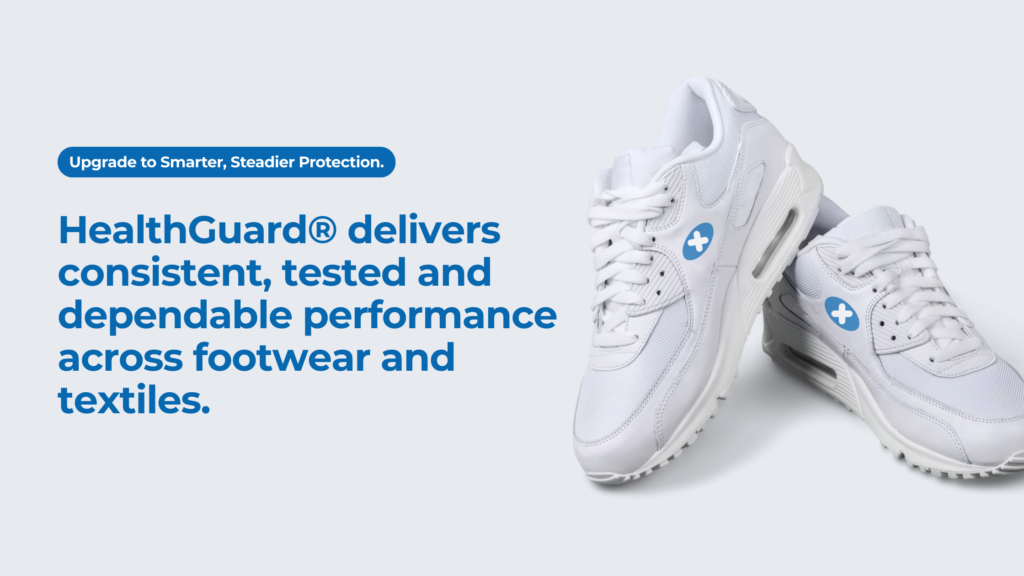
Small Formulation Change, Big Brand Impact
You don’t need to launch a full product range overhaul to benefit. Often a targeted upgrade of the coating system on one product line can unlock higher performance claims, premium positioning, lower return rates and stronger talking points for retailers and brand marketing
Choosing anti-microbial technology is no longer about checking a box. It’s about consistency, traceability and performance, the kind of protection that aligns with global standards and supports premium brand positioning.
If your current anti-microbial solution leaves you wondering “how did this happen?”, it may be time to explore a foundation built on proven biotechnology.
Talk to us about integrating HealthGuard® into your next production cycle.
 简体中文
简体中文  English